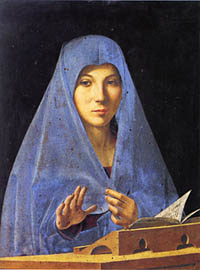
The Virgin Annunciate
Antonello da Messina (Italian, ca. 1430–1479)
Oil on panel; 13 5/8 x 17 3/4 in. (34.5 x 45 cm)
Galleria Regionale della Sicilia, Palermo
The Metropolitan Museum of Art, New York
Antonello
da Messina: Sicily's Renaissance Master
December 13, 2005–March 5, 2006 European Paintings Galleries, 2nd floo

Syllabus
AH 251: The Museum Experience
Albertus Magnus College
New Haven, CT
January - March 2006
Jerry Nevins, Professor
www.jnevins.com
203 Aquinas Hall
203-773-8546
Overview:
Art history and art appreciation courses are traditionally taught with projected images in a darkened room. Contrast that with the experience of viewing actual works in beautifully lit and presented displays. This course in art appreciation will provide an authentic experience of living art.
We are fortunate in that we are in close proximity to some of the greatest institutions for collecting, presenting and interpreting art in the world. Art must be engaged personally to be understood and appreciated. Subtleties such as color, scale, texture, space and many other qualities of a work can never be fully understood in a projected image. You the viewer must put your self in the place of the artist as they created the work and engage it personally and physically.
This course focuses on the personal experience and response to art. It is not limited to any particular time period -- you literally have the entire visual history of civilization to engage. On each outing, you will choose a work or a related body of work to write about. Follow your intuition as you begin each new exploration. What excites you? What do you want to learn more about? Take time to fully engage the work. Follow up with research about the materials (medium), cultural context and biographical information about the artist. Write a 3-page paper for each outing and include at least one image of the work.
This is a level A course and fulfills the general education component for the art requirement. As part of the Invitation to Insight program, this course seeks to engage you in a discourse about human creativity from around the world and from all eras. It seeks to foster in you critical thinking skills relevant to gaining a deeper understanding of visual art. After taking this course, hopefully you will continue to visit museums for lifelong enrichment and education.
Goals of the written component of the course:
o Understand and use the vocabulary of art
o Identify some of the purposes of art and the roles of the artist
o Perceive the elements and principles of design and explain how they are being used in a work of art.
o Understand how the materials and processes involved in the production of a work contribute to its meaning.
o Discuss art in an historical and cultural context
Topics to be covered in each paper:
Context: Carry a journal on each outing. In it, write down information regarding date, period, type of work, artist, etc. When was the object made? Did it serve a function? Was it made for religious or secular reasons? Does the work contain symbolism? What do the symbols mean? Is a message or lesson communicated? What were the cultural, political, economic, social or religious influences on the life of the artist and the community in which he/she worked? How does the style of the work reflect the time or culture in which it was made? Why did the artist make it? Was it a commission? Was there a patron? Personal mission or vision?
Formal analysis.... What do you see? What does the composition look like? What stands out the most when first approaching the work? How did the artist use color, line, texture, material (wood, clay, steel, paper, canvas, etc) What about the use of scale, proportion and balance? How does the size of the object contribute to its impact or meaning? Take notes in your journal... detailed notes.... look harder than you imagined possible. No detail is unimportant. Keep writing. Explain how the artist consciously uses these various elements. This translation of visual information into text will help clarify what you are seeing. What have other critics or art historians said about the formal elements of a piece? You may quote or attribute those ideas. You are probably not used to looking so closely and carefully at a visual object. Verbalizing what you see is hard to do. Keep at it. Details matter!
1. Summarize the overall appearance of the object. Then move into details. You may begin at one side and move across or go from top to bottom.
2. Note the elements of composition -- line, balance, texture, perspective, color, contrast. What is the medium -- acrylic, oil, conte, etc.?
3. Let your eyes pull you into the experience. What do you see first? What next? And so on.
Style analysis.... what style does the piece fit into? What art movement,
i.e., Impressionism, Cubism, Expressionism, etc. How does this piece illustrate
the essential qualities of that style or period? Include a reference to larger
cultural or historical issues surrounding the creation of the work. What iconography
did the artist use? Before the modern era, artists often worked with many
traditional icons of mythology or religious meaning. Place the artist's use
of the iconography in the context of his era and how it might be different
from the same subject treated in a different sylistic era.
Personal Discovery... This is essential. The cental thesis point of the paper hinges on this. What drew you to the piece in the first place? Why did you choose this piece in the face of the myriad of possibilities? What is your emotional response? Your first-person account of your encounter with the artwork is at the heart of the writing assignment.
Resources for writing:
Important links:
Metropolitan Museum of Art, Timeline of Art History.
Extremely useful trove of information. Searchable database by artist, movement, medium, period, etc.
Art History Resources on the Web Maintained by Dr. Christopher L. C. E. Witcombe Professor, Department of Art History, Sweet Briar College. Updated November, 2004. Amazingly rich resource!
Wesleyan University Writing Center Very helpful suggestions on how to write about art history. Deatailed questions to ask oneself about Painting, Sculpture and Architecture.
Dartmouth Writing Program How to write about art. How to master the art of "simultaneously analyzing and describing the work of art you have chosen to discuss."
The Smithsonian Museum http://www.si.edu/
Home page of the Smithsonian, a good place to begin research.
1348 museums online in the United States, from A. Philip Randolph Pullman Porter Museum to ZEUM
Master list of art vocabulary and meaning, Compiled by the art faculty at Okanagan University College, British Columbia, Canada
Checklist or Rubric for assessment of performance in writing about art, compiled by M. Bartel, Goshen College
Assignment:
Browse through all of the following shows. Plan your outings with these events in mind.Begin your research, if possible before encountering the work in person.
Antonello
da Messina: Sicily’s Renaissance Master December 13, 2005–March 5, 2006 European
Paintings Galleries, 2nd floor
The
Four Seasons January 28, 2006–August 13, 2006 Galleries for Chinese Painting
and Calligraphy, 2nd floor, north wing
Samuel Palmer (1805–1881): Vision and Landscape March 7, 2006–May 29, 2006
Galleries for Drawings, Prints, and Photographs, and The Howard Gilman Gallery,
2nd floor
Robert
Rauschenberg: Combines December 20, 2005–April 2, 2006 Iris and B. Gerald
Cantor Exhibition Hall, 2nd floor
Santiago
Calatrava: Sculpture into Architecture October 18, 2005–March 5, 2006
Fra Angelico, Through January 29th, 2006
"This first major exhibition of Fra Angelico’s work since the quincentenary
exhibition of 1955 in Florence—and the first ever in this country—reunites
approximately 75 paintings, drawings, and manuscript illuminations covering
all periods of the artist’s career, from ca. 1410 to 1455."
Museum of Modern Art
John Szarkowski:
Photographs February 1–May 15, 2006 Photography Galleries. "Szarkowski
is one of the most influential photography curators and critics of the twentieth
century. Now the hidden half of his lifetime of artistic work is finally given
the attention it deserves."
Edvard Munch: The
Modern Life of the Soul February 19–May 8, 2006
"This is the first retrospective devoted to the work of the internationally
renowned Norwegian painter, printmaker, and draftsman to be held in an American
museum in almost three decades. Edvard Munch: The Modern Life of the Soul
surveys Munch’s career in its entirety, from 1880 to 1944, showcasing his
artistic achievement in its true richness and diversity."
Without Boundary:
Seventeen Ways of Looking February 26–May 22, 2006
"An ever-increasing number of artists, such as Mona Hatoum, Shirin Neshat,
and Shahzia Sikander, have come from the Islamic world to live in Europe and
the United States. Without Boundary brings together some of these major contemporary
voices. The exhibition features the work of artists of diverse backgrounds—Algerian,
Egyptian, Indian, Iranian, Iraqi, Lebanese, Turkish, Pakistani, Palestinian,
and Turkish—across a variety of mediums, including painting, sculpture, video,
animation, photography, carpet and textile, and comic strips."
Yale Center for
British Art, New Haven, CT
The YCBA holds one of the most comprehensive collections of British Art outside
of London. The Center places special emphasis on art from the 17th Century
to the present. Currently showing:
The Worlds of Francis Wheatley Meet at the Information Desk.
31 AUGUST, 2005 — 5 FEBRUARY, 2006 "This exhibition will highlight
the Center's rich holdings of Wheatley's work in all genres and media. It
will feature oil paintings and evocative and delicate watercolors and drawings,
as well as reproductive prints after Wheatley's work." EXHIBITION TOUR
noon on Saturday, Jan 21
1 pm Yale
Student Guide Tour Meet at the Information Desk, January 21
Yale University Art Gallery
Sat Jan 21 2006 3:00 PM EST "Angles on Art" YUAG (Yale University Art Gallery), Chapel at High St
American Paintings, Sculpture, and Decorative Arts Ongoing, third floor
Online Magazine from YAG: What Is Art and Why Does It Matter?
Angles
on Art Thematic online audio visual tours of elements in the
permanent collection of YAG given by Yale undergraduate students.
Wadsworth Atheneum, Hartford, CT
Restored
to Life: Benjamin West's The Raising of Lazarus
Jun 18, 05 through Apr 9, 06
"Restored to Life is the culmination of a fifteen-month conservation
project of a monumental canvas by Benjamin West, one of the most influential
American painters of the eighteenth century. One of the largest paintings
in the Atheneum's collection, The Raising of Lazarus was originally commissioned
as an altarpiece for England's Winchester Cathedral."
154Kota Ezawa / MATRIX Nov 3, 05 through Feb 5, 06 San Francisco based video artist Kota Ezawa draws on iconic imagery of the modern-era to create simplified renderings that comment on the influence of television, film and photography in shaping collective experience.
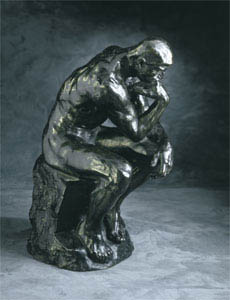
Rodin: A Magnificent Obsession Sculpture from the Iris and B. Gerald Cantor Foundation Jan 28, 06 thru Apr 30, 06
SPECIAL EXHIBITION TOURS "Tour our newest special exhibition Saturdays
at 1:00 p.m. and Sundays at 2:30 p.m. Free with admission to the special exhibition."
The Aldrich Museum of Contemporary Art, Ridgefield, CT
Cyrilla Mozente
More Saints Seen (2002 to 2005)
" Consists of a series of small-scale vessels made primarily from cream-colored
felt. These imperfect, even awkward, objects have an elegance and spirituality
that belies their material and fabrication. Mozenter's title comes from a
line in Gertrude Stein's libretto, Four Saints in Three Acts. Stein's writing
has played a role in Mozenter's work in the past to the extent that the artist
feels that the work is at times "a collaboration" between her and this avant-garde
American writer from the first half of the twentieth century."
Mary Temple: Extended Afternoon October 16, 2005 - August 6, 2006
"The Aldrich Contemporary Art Museum presents Extended Afternoon a three phase installation by Mary Temple, on view through the beginning of August 2006, with a public reception on completion of phase 3, Sunday, March 26, 3-6. Visitors to the museum may notice an intense shaft of light that works it's way through the Museum over the course of several months, much the way the light of the late afternoon moves across a room. Close observation reveals that these passages of light are in fact trompe l'oeil paintings of light falling across interior and exterior walls. Temple asks us to trace the light as it begins outside the museum on the Northwest corner (phase 1) and moves inside and through the galleries bisecting the space diagonally with passages of light that hit walls and corners (phase II). And finally, in phase 3, a beam of "light" finds its way to the furthest reaches of the museum, rakes down the wall and pools on the floor plane of the lower gallery. The hardwood floor in this gallery is flooded with light and shadow, giving form to the shard that has traversed the museum."
Calendar:
SPRING 2005 MOD 3
Monday / Wednesday Jan. 19th (W) - March 9th (W)
Tuesday / Thursday Jan. 20th (Th) - March 10th (Th)
Saturday Jan. 21nd - March 11th
Monday January 18th - Martin Luther King Day (College Closed)
Monday February 20st -President's Day (College Closed)
Class Schedule
Class 1 Sat, Jan 21,
Introduction to the course. Online research methods. How to write about art. How to photograph works of art in a museum.
Visit:
Yale
Art Gallery 3 pm guided introduction to the collection
Yale
Center for British Art 1 pm Tour
Class 2 Date TBA with class
Visit: Metropolitan Museum of Art, NYC
Class 3 Date TBA with class
Visit: The Museum of Modern Art, NYC
Class 4 Date TBA with Classs
Visit: The Aldrich Museum of Contemporary Art
Ironwood Gallery, Ridgefield, Museum-quality fine art and contemporary craft in glass, wood, metal, clay and fiber
The Bruce Museum
Class 5 Date TBA with Class
Visit: The Wordsworth Atheneum, Hartford
Academic Expectations: Attend all classes. A missed trip must be made
up with a visit on your own to the institution. Bring the receipt as proof
of attendance. A maximum of 1 missed day is all that can be permitted.
The basis of your grade will be your written
work.
Write about your piece, artist or show with
from an enthusiastic, personal point of view yet also support your ideas with
research on historical and cultural context as well as biographical information
about the artist(s). Keep a journal/notebook that you bring with you on each
outing. Take notes and write down impressions about the art, the museum, the
experience, etc. Refer to the discussion above on formal analysis, context,
style analysis and personal discovery for specifics of what I would like to
see in your journal. Each of the 5 papers will be graded. Turn in your journal
entries along with the paper so I can get a sense of how you made the choice
of artist and so that I can follow along on your journey of observation, and
insight. Your journal notes do not have to be finished prose. I am more interested
in how the journal will reflect your process of perception and the time you
spent with the work of art.
Tradition of Honor: As a member of the Albertus Magnus College Community, each student taking this course agrees to uphold the principles of honor set forth by this community, to defend these principles against abuse or misuse and to abide by the regulations of the College. To this end, every student must write and sign the following statement at the end of each examination: "I declare the Honor Pledge."
Special Needs and Accommodations: Please advise the instructor of any special problems or needs at the beginning of the semester or mod. Those students seeking accommodation based on disabilities should provide a Faculty Contact Sheet obtained through the Academic Development Center in Aquinas Hall, (203) 773-8590.
Contact me through email
Jerry Nevins
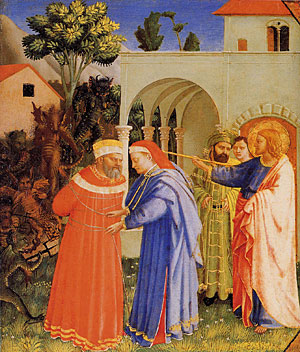
Fra Angelico (Italian, 1390/5–1455)
The Apostle Saint James the Great Freeing the Magician Hermogenes,
ca. 1429–30
Mtropolitan Museum of Art through 1/29/06
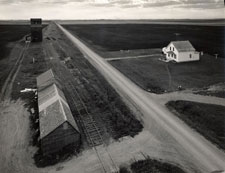
John Szarkowski MOMA 2/1/06 - 5/15/06
From Country Elevator, Red River Valley. 1957.